Posts

Stainless Steel Flanges
Image
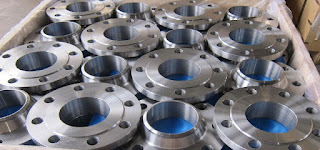
  Pipes, valves, and other parts of industrial equipment need to be joined together using flanges, which are an essential component. One of the metals that is used in the biggest number nowadays is stainless steel, which is also one of the metals that is used the most. This metal is superior to a number of other metals in a range of applications due to the outstanding physical characteristics that it has. For instance, it possesses a high level of resistance to corrosion and durability. This metal is used in the creation of a vast assortment of goods, many of which are utilised in industrial, commercial, and residential situations. One of the most widespread applications for stainless steel is in the production of pipes, which is one of the reasons why this material is so widely used. At different locations along the lengths of these pipes, there are additional attachments made of stainless steel that provide support for the pipes. Stanley Alloys is recognised as a top-tier suppli...
Which are the main differences between Socketweld Fittings and Threaded Fittings?

Image
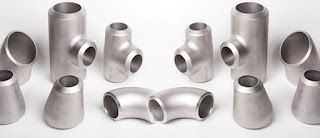
  How can you tell whether a fitting has been forged? Pipes and piping systems with tiny bores often make use of socket-weld and threaded forged fittings, both of which are kinds of pipe fittings (generally below 4 inches in diameter for Class 3000 and below 2 inches for fittings in classes 6000 and 9000). These fittings are produced by forging and machining solid steel, and they are available in a wide range of configurations, including elbows, tees, reducers, unions, and couplings. They are also known as solid steel fittings. The oil and gas socket weld and threaded fittings specifications are both included in the ASME B16.11 standard. Buttweld fittings that comply with ASME B16.9 are required if the pipe diameter is greater. SOCKET WELD FITTINGS On the other hand, threaded fittings are screwed into the pipe, while fillet welds are used to join socket weld fittings to pipes. In circumstances in which sturdy and long-lasting connections are needed, socket weld fittings are employe...

Stainless Steel 304 Round Bar

Image
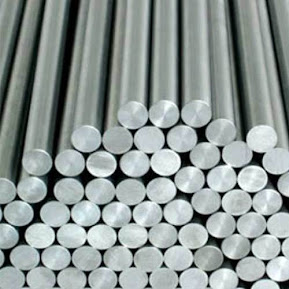
  This metal component of Stainless Steel 304 Round Bar contains sulphur, which was particularly developed to increase mechanical and corrosion resistance. Austenitic, non-magnetic stainless steel 304 round bar cannot be heat-treated to a harder state. It is an improved 18% Chromium/8% Nickel Stainless Steel that may be freely machined. Grade 304 stainless steel does not oxidise well when exposed for brief periods of time to temperatures up to 760°C. It also has high oxidation resistance when used continuously at 870°C. Tensile strength for stainless steel type 304 is 85,000 psi, yield strength is 45,000 psi, and elongation is 50%. However, as 304 is prone to carbide precipitation when utilised constantly at 425-860°C, this is not advised. For solution treatment or annealing, rapid cooling might be utilised after heating to 1010–1120°C. Type 304 has a restricted capacity to be cold worked. Despite the possibility of some chilly working, rapid bending need to be avoided. After bei...

Benefits of SS 303 Round Bar

Image
  Low-carbon steels, usually referred to as iron alloys, with at least 10% by weight of chromium and at least 50% by volume of iron are known as stainless steel. Stainless steel does not easily corrode, rust, or stain with water like regular steel does, and the chromium gives it great corrosion resistance for a specific use or context. The SS round bar is one of the most significant players in the machining sector. Stainless steel round bars are employed in industrial sectors that produce machinery and fasteners with the outstanding property of corrosion resistance. Benefits of Using SS 303 Rod  Resistance to corrosion:  Stainless steel 303 Round Bar items have a great resistance to corrosion, making it possible for them to be utilised in a variety of conditions, which is one of their main advantages. At high temperatures and pressures, it is also fire and heat resistant. Strongly alloyed grades can withstand corrosion in the majority of alkaline solutions, acids, and c...

Stainless Steel Round Bar

Image
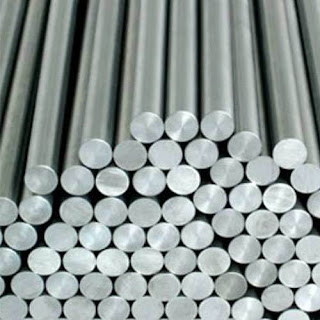
  About Stainless Steel Stainless Steel is austenitic Steel.This is a mixture of iron and other components known as stainless steel metal alloy, which contains 10% chromium and 1% carbon, making it more robust and corrosion resistant. As a result, this combination aids in the moulding of a wide range of goods by making them stronger and harder than steel. What is Round Bar? Stainless Steel 304 Round Bars are a cylindrical stainless steel product manufactured of stainless steel grades 304, 321 and 316. These stainless steel round bars are commonly utilised in industries such as food processing and construction. Stainless steel has several applications, particularly in high-temperature environments, and it is simple to make. They are also employed in circumstances where the majority of the welding is unnecessary. It becomes more inexpensive as a result. Stainless steel round bars are available in several grades, ranging from 17-4PH to 316 stainless steel. Benefits of Round Bar Corro...

304 Stainless Steel Fasteners

Image
  Even though they are small and have a simple look, 304 stainless steel fasteners are quite important in every application. Fasteners serve as the connecting medium for everything from tiny pipe connections to lofty buildings and skyscrapers. Small screws, nuts, bolts, and other fasteners are all that are needed to link the gaps and sustain enormous frames. Despite appearing little, they have a significant function. Even though they could be little, they nonetheless possess and uphold all the qualities of stainless steel. Fasteners made of stainless steel can endure high pressures and various atmospheres. As we all know, the phrases "anti-rust" and "anti-corrosive" come to mind right away on hearing the name stainless steel. Stainless steel is renowned for having an excellent capacity to fend against rust, corrosion, and abrasion. The same is true with Stainless steel 304 fasteners . They resist corrosion, which keeps joints from deteriorating. What makes stainles...

What is Difference between Incoloy 800 and Inconel 800?

Image
  The superalloys Incoloy and Inconel, which belong to the same family, are frequently referred to as high performance alloys. Both superalloys display great oxidation resistance in addition to having a strong resistance to several types of corrosion. Both superalloys demonstrate extremely high mechanical strength at high temperatures. These elements work together to give both alloys their excellent performance characteristics. Since they are members of the same family, their characteristics are similar, but what distinguishes them is the variation in their makeup. The composition of Inconel 800 and Incoloy 800 is where there is the most significant difference. The chemical elements nickel and chromium predominate in the alloy known as Inconel 800. This alloy's chemistry often comprises more than 50% nickel. In contrast, the principal components of the alloy Incoloy 800 are nickel, iron, and chromium. Contrary to the former, this specific alloy has a chemical composition with less...